Samgyetang (Korean Ginseng Chicken Soup)

- Prep
20 minutes - Cook
1 hour 15 minutes - Serves
2 servings - Difficulty
medium
Ingredients
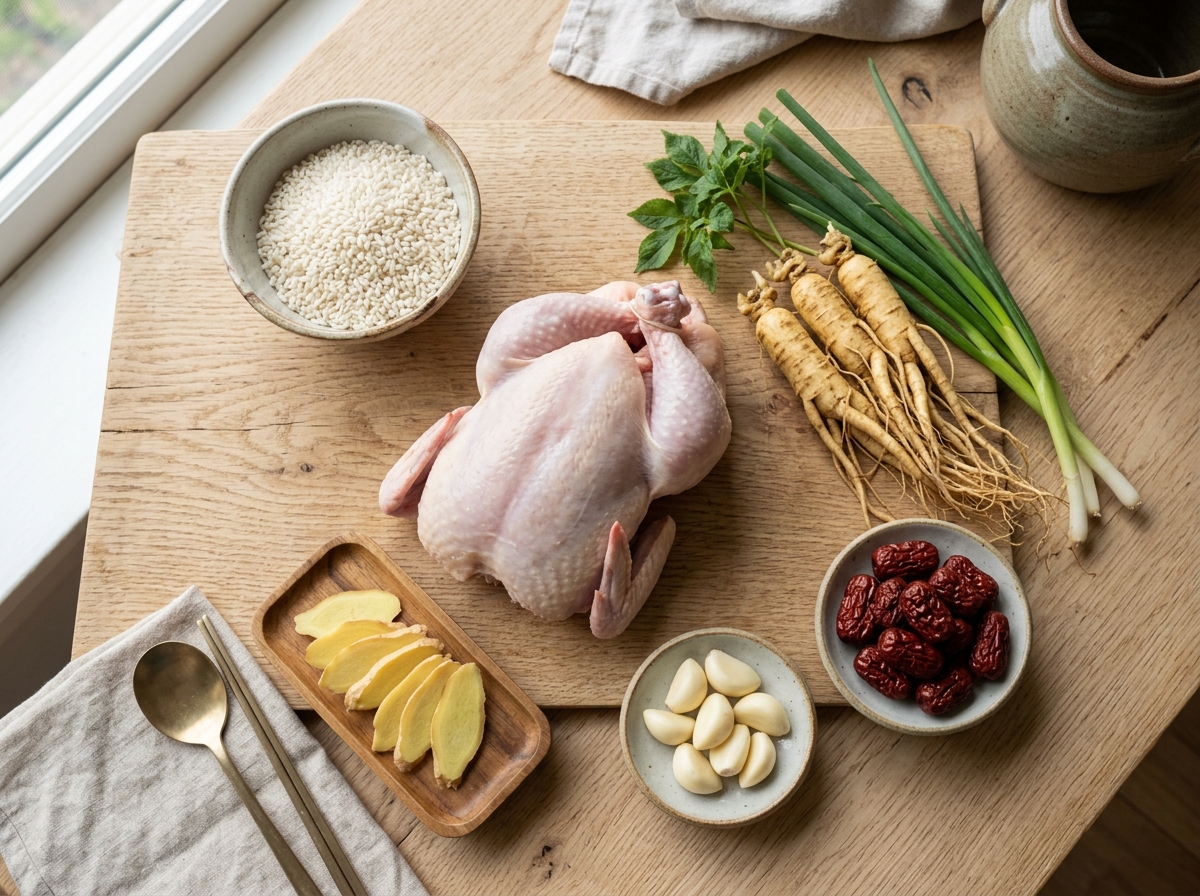
- 1 small whole chicken (about 2-2.5 lbs / 900-1100g, preferably a Cornish hen or young chicken)
- 1/3 cup sweet glutinous rice (찹쌀, chapsssal), soaked 30 minutes
- 1-2 fresh ginseng roots (인삼, insam), or 2-3 dried ginseng slices
- 6-8 dried jujubes (대추, daechu / Korean red dates)
- 6 cloves garlic, peeled
- 4-5 slices fresh ginger
- 2 stalks green onion, cut into 2-inch pieces
- 8 cups water
- Salt and ground black pepper, for serving
- Optional: 1-2 chestnuts, peeled
Samgyetang is the soup Koreans turn to when they need serious nourishment — traditionally eaten on the hottest summer days to fight heat with heat, restoring energy through a whole young chicken simmered until tender and stuffed with sticky rice, ginseng, and sweet jujubes. The broth turns milky-white and rich, and every spoonful feels restorative. This is comfort food with purpose, and once you’ve made it at home, you’ll understand why it’s worth the effort.
Prepare the Chicken and Rice
Rinse the whole chicken thoroughly inside and out under cold running water. Pat it completely dry with paper towels — this helps the stuffing stay put and prevents excess water from diluting the broth. Trim off any excess fat around the cavity opening.
Drain your soaked glutinous rice well. The soaking softens the grains so they cook evenly inside the chicken. If you can’t find glutinous rice (also called sweet rice or sticky rice), regular short-grain white rice works — just reduce the soaking time to 10 minutes. The texture will be less chewy but still delicious.
Stuff the Chicken
Begin stuffing the chicken cavity. Start with 2-3 tablespoons of the soaked rice, then tuck in 1-2 garlic cloves, 1 ginseng root (or a few dried slices), and 2-3 jujubes. Add another layer of rice, more garlic, and finish with rice until the cavity is about three-quarters full — don’t overstuff or the rice will burst out during cooking.
Use a toothpick or small skewer to close the cavity opening, weaving it through the skin like you’re sewing. Some cooks tie the legs together with kitchen twine, but a toothpick is easier and works just as well.
💡 Tip: If fresh ginseng is impossible to find, dried ginseng slices (sold online or in some health stores) give you the signature earthy, slightly bitter flavor. In a pinch, skip it entirely and add an extra piece of ginger — you lose the traditional medicinal edge, but the soup is still deeply comforting.
Simmer the Soup
Place the stuffed chicken in a heavy-bottomed pot or Dutch oven. Add the remaining garlic cloves, ginger slices, jujubes, green onion pieces, and any leftover ginseng. Pour in 8 cups of cold water — it should nearly cover the chicken.
Bring to a boil over high heat, then immediately reduce to a gentle simmer. Skim off any foam or impurities that rise to the surface in the first 10 minutes — this keeps the broth clear and clean-tasting.
Cover and simmer for 60-70 minutes, until the chicken is completely tender and the meat easily pulls away from the bone. The broth should turn a beautiful milky white from the collagen and marrow. If it’s still clear, you may need another 15-20 minutes.
Check for Doneness
The chicken is ready when the leg joint wiggles freely and the meat at the thickest part of the thigh reaches an internal temperature of 165°F (74°C). The rice inside should be fully cooked and sticky. Taste the broth — it should be rich and savory with a subtle herbal note from the ginseng.
If the rice inside isn’t tender yet but the chicken is done, just let it rest off the heat, covered, for 10 minutes. The residual heat will finish the rice.
Serve
Carefully transfer the whole chicken to a large serving bowl (or individual bowls if making multiple servings). Ladle the hot broth over the chicken, making sure to include some garlic, jujubes, and ginseng in each bowl. Serve immediately with small dishes of coarse sea salt and freshly ground black pepper on the side — diners season their own soup to taste, and traditionally you sprinkle salt directly into the broth and onto bites of chicken.
The rice stuffing is eaten right out of the chicken cavity with a spoon. Some people like to scoop it into their broth; others eat it separately. There’s no wrong way.
Substitutions and Variations
Can’t find a small whole chicken? A Cornish hen is ideal (traditional samgyetang uses young chickens about this size). A regular chicken works too, but you may want to cut it in half and make two servings in separate pots, or increase the water and cooking time.
For the glutinous rice: Short-grain sushi rice or even jasmine rice can substitute, though the texture won’t be as satisfyingly chewy. For jujubes: Dried dates (the regular kind) add similar sweetness, though the flavor is different. If you skip them, consider adding a small piece of dried shiitake mushroom for extra umami.
Fresh ginseng is the hardest ingredient to source outside Korea. Dried slices are easier to find online (Korean grocers, Amazon, or herbal shops). If you truly can’t find any form of ginseng, the soup loses its signature “stamina food” character but remains a wonderfully rich, garlicky chicken soup — still worth making.
Leftover samgyetang keeps refrigerated for 2-3 days. The broth will gel when cold (that’s the good collagen!) and the flavors deepen. Reheat gently and add a splash of water if needed.