Rabokki Recipe (Ramen + Tteokbokki Street Food Combo)

- Prep
10 minutes - Cook
15 minutes - Serves
2 servings - Difficulty
easy
Ingredients
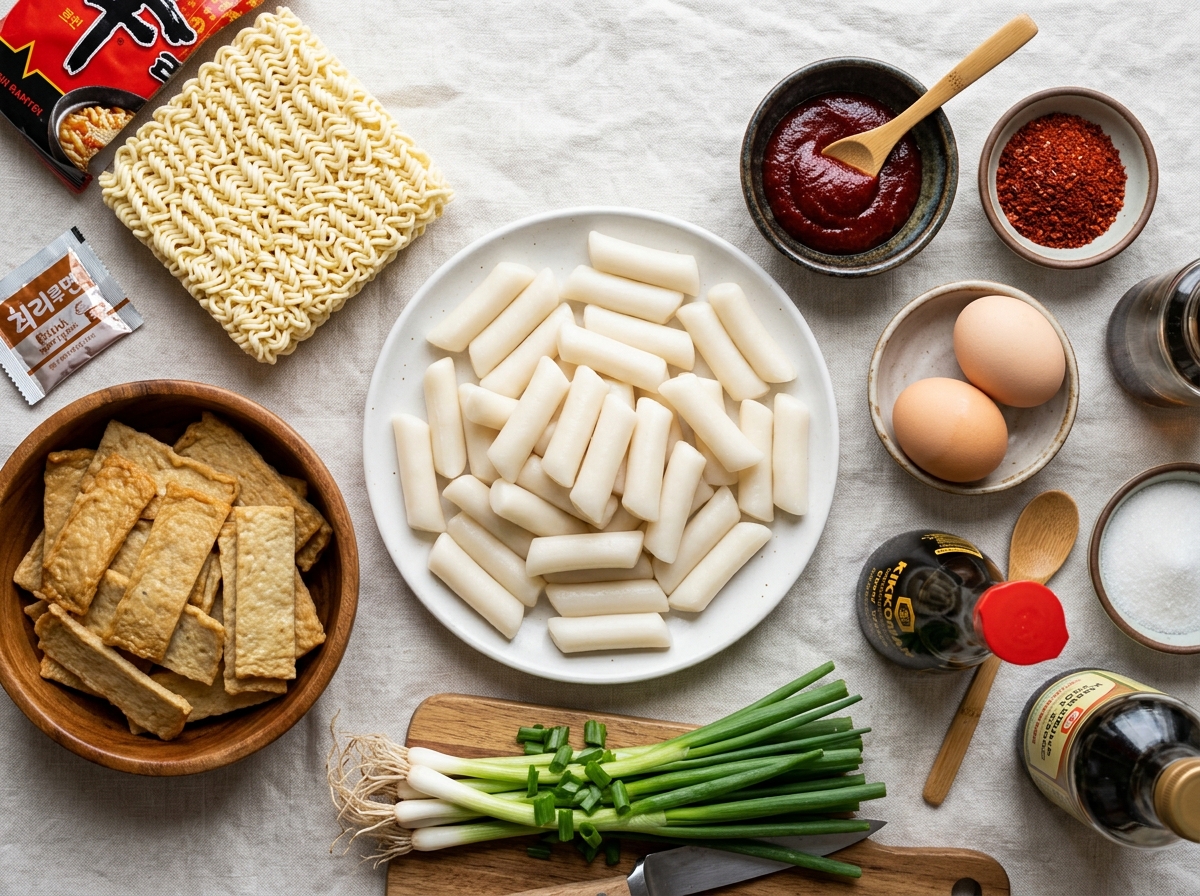
- 300g (10.5 oz) Korean cylinder-shaped rice cakes (garaetteok), fresh or frozen
- 1 package instant ramen noodles (any brand)
- 100g (3.5 oz) Korean fish cake (eomuk), sliced into bite-sized pieces
- 2 cups water or anchovy stock
- 2 tablespoons gochujang (Korean red chili paste)
- 1 tablespoon gochugaru (Korean red chili flakes)
- 1 tablespoon soy sauce
- 1 tablespoon sugar or corn syrup
- 1 teaspoon minced garlic
- 2 green onions, cut into 2-inch pieces
- 2 hard-boiled or soft-boiled eggs (optional)
- 1 tablespoon toasted sesame seeds
- Optional: 1 cup shredded mozzarella cheese for cheese rabokki variation
Rabokki is the ultimate Korean snack-food mashup, born in the bustling 분식집 (bunsikjip, casual snack bars) where students and office workers go for quick, satisfying comfort. Combining the chewy pull of tteokbokki rice cakes with the slurpable satisfaction of instant ramen, it’s spicy, sweet, and dangerously addictive. The cheese variation has become wildly popular in recent years—that gooey stretch over spicy-sweet sauce is pure magic.
Prep Your Rice Cakes and Stock
If using frozen rice cakes, soak them in warm water for 5-7 minutes until they soften just enough to separate. Fresh rice cakes can go straight into the pan. This step prevents them from sticking together and ensures even cooking.
For the liquid base, plain water works fine if you’re in a pinch, but a quick anchovy stock (just simmer a few dried anchovies in water for 5 minutes, then strain) adds that authentic bunsikjip depth. The ramen seasoning packet will contribute plenty of flavor, so don’t stress if you only have water.
Make the Spicy Sauce Base
In a wide, shallow pan or skillet, combine 2 cups of water (or stock), gochujang, gochugaru, soy sauce, sugar, and minced garlic. Stir everything together over medium heat until the gochujang dissolves completely and the sauce turns a vibrant red-orange color. This should take about 1-2 minutes.
Taste the sauce now—it should be boldly spicy-sweet. If it’s too spicy for your preference, add a bit more sugar or a splash of soy sauce to balance it. Remember, the rice cakes and noodles will absorb some of this intensity as they cook.
Cook the Rice Cakes and Fish Cake
Add the rice cakes and fish cake slices to the bubbling sauce. Bring to a boil, then reduce to medium heat and simmer for 6-8 minutes, stirring occasionally to prevent sticking. The rice cakes are ready when they become translucent around the edges and feel soft and chewy when you bite one—not mushy, but tender with a slight bounce.
The sauce will thicken considerably as the rice cakes release their starch. If it gets too thick before the rice cakes are done, add a few tablespoons of water. You want a glossy, clingy sauce, not a dry pot.
Add the Ramen Noodles
Break the ramen noodle block into chunks and nestle it into the sauce. Cook for 2-3 minutes, gently separating the noodles with chopsticks or a fork as they soften. Don’t add the seasoning packet yet—or use only half if you like extra umami punch, since the gochujang sauce already has plenty of salt and spice.
The key here is timing: you want the noodles just cooked through but still bouncy, not bloated and soggy. Rabokki should have textural contrast between the chewy rice cakes and springy noodles.
💡 Tip: If you’re making the cheese version, this is the moment. Once the noodles are cooked, sprinkle shredded mozzarella over the top, cover the pan with a lid for 1 minute, and let the cheese melt into gooey perfection. The contrast between spicy sauce and creamy cheese is what makes cheese rabokki a cult favorite.
Finish and Serve
Toss in the green onion pieces and stir everything together one last time. The sauce should be thick enough to cling to every piece, glossy and deeply red. Turn off the heat.
Transfer to a wide, shallow serving bowl. Top with halved boiled eggs, a generous sprinkle of sesame seeds, and extra green onions if you like. Rabokki is best eaten immediately while the rice cakes are still chewy and the noodles are hot.
Serving and Variations
Serve rabokki straight from the pan for that authentic bunsikjip experience—grab your chopsticks and dig in while it’s piping hot. It’s a complete meal on its own, but if you want the full snack-bar spread, pair it with crispy fried mandu (dumplings) or a simple kimchi side.
Can’t find Korean fish cake? Imitation crab sticks (the kind used for sushi) work surprisingly well, or just add more vegetables—cabbage, onion, or mushrooms all soak up the sauce beautifully. For a protein boost, toss in some sliced spam or hot dogs (yes, really—it’s a classic bunsikjip addition).
If you’re cooking for kids or spice-averse eaters, cut the gochugaru in half and add a tablespoon of ketchup to the sauce for a sweeter, milder version. And don’t skip the cheese variation at least once—it transforms the dish into something ridiculously indulgent.