Leveled-Up Korean Ramyeon (Instant Noodle Upgrades)

- Prep
5 minutes - Cook
8 minutes - Serves
1 serving - Difficulty
easy
Ingredients
- 1 packet instant ramyeon (any Korean brand like Shin, Jin, or Samyang)
- 2 cups water (or follow packet instructions)
- 1 large egg
- 1 slice American cheese (or mild cheddar)
- 2 green onions, thinly sliced
- 1 clove garlic, minced (optional but recommended)
- 1 teaspoon sesame oil
- ½ teaspoon gochugaru (Korean red pepper flakes), optional for extra heat
- 1 tablespoon chopped kimchi, optional
Instant ramyeon is already delicious straight from the packet, but Koreans have perfected the art of turning this humble meal into something truly crave-worthy. The secret isn’t exotic ingredients—it’s about timing, layering flavors, and knowing exactly when to add each topping. A soft egg with a jammy yolk, melted cheese that makes the broth creamy, and the sharp bite of fresh green onions transform basic noodles into comfort food you’ll actually look forward to.
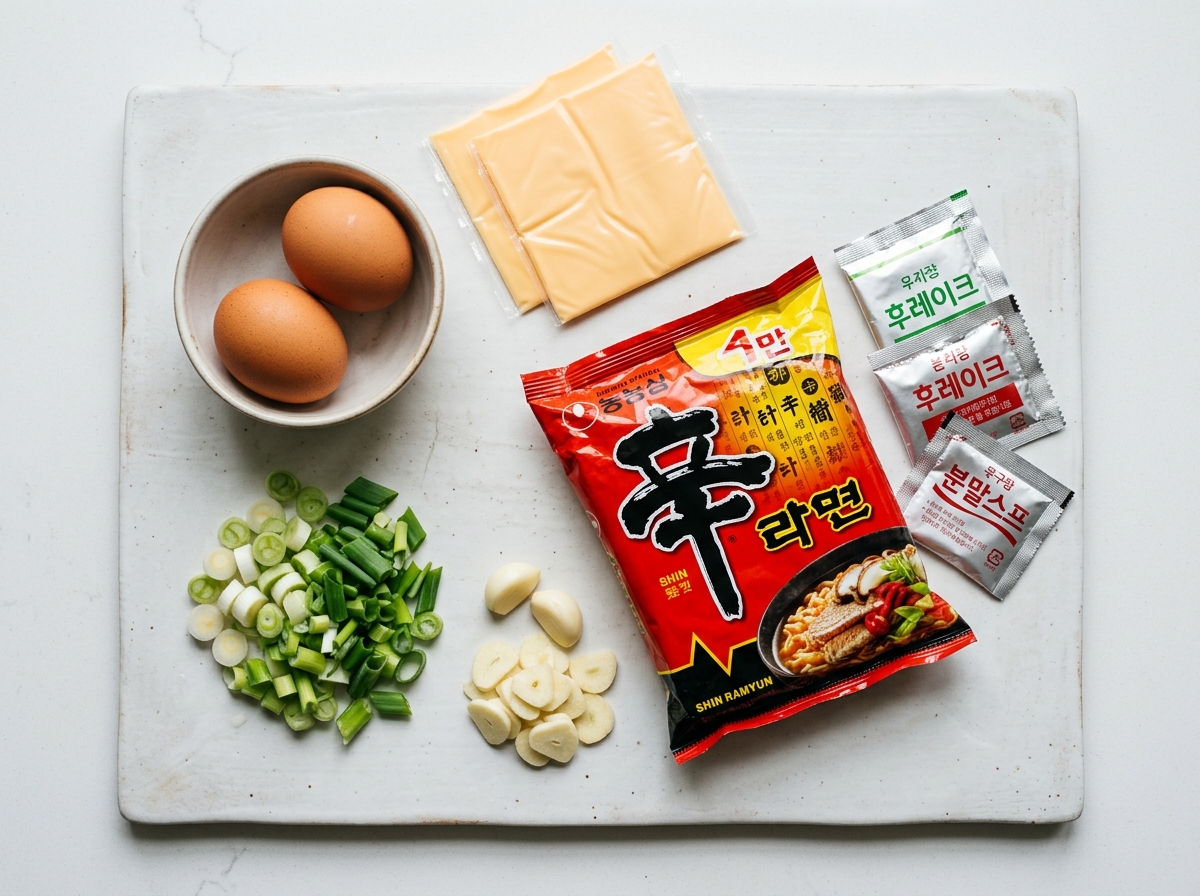
Prepare Your Mise en Place
Before you even turn on the stove, slice your green onions thinly and crack your egg into a small bowl. This matters more than you’d think—ramyeon cooks fast, and fumbling with ingredients while your noodles turn to mush is the most common mistake. If you’re using garlic, mince it now. Have your cheese slice ready to go.
The key to restaurant-quality ramyeon at home is treating it like real cooking, not just boiling water and dumping everything in.
Build Flavor in the Water
Pour your water into a small pot (the one that came with your ramyeon pot set if you have one, or any small saucepan). Add the minced garlic now, before the water boils—this blooms the garlic flavor throughout the broth instead of leaving it raw and harsh. If you’re adding kimchi, throw it in at this stage too. The kimchi will infuse the broth with tangy, funky depth.
Bring the water to a rolling boil over high heat, which should take about 3-4 minutes.
Cook the Noodles with Intention
Once boiling, add your ramyeon seasoning packet (use all of it or hold back a bit if you prefer less sodium) and stir to dissolve. Add the noodle block and use chopsticks to gently separate the strands as they soften—don’t just let them sit there in a clump. This ensures even cooking and better texture.
Cook for 2 minutes, stirring occasionally. The noodles should still have a slight bite; they’ll continue cooking off the heat.
Time Your Egg Perfectly
Here’s where technique separates okay ramyeon from incredible ramyeon. Crack your egg directly into the center of the pot after those 2 minutes. Immediately reduce the heat to medium-low. Don’t stir—let the egg sit undisturbed for 1-1½ minutes for a runny yolk, or 2-3 minutes for a jammy-set yolk.
The gentle simmer sets the white without overcooking the yolk into a chalky ball. You want that golden yolk to break and enrich the broth when you eat.
💡 Tip: If you prefer a ribbony egg-drop style instead, beat the egg first and drizzle it in a thin stream while stirring the broth in one direction—it creates silky strands throughout.
Add Cheese and Finish
Turn off the heat. Lay your cheese slice directly on top of the noodles—the residual heat will melt it into creamy, gooey perfection in about 30 seconds. Don’t stir it in completely; you want pockets of melted cheese as you eat.
Drizzle the sesame oil over the top (this adds nutty aroma that makes the whole bowl smell amazing) and scatter most of the green onions on top, reserving a small pinch for garnish. If you want extra heat, sprinkle the gochugaru now.
Serve Immediately
Transfer everything to your serving bowl if you didn’t cook directly in one. The best ramyeon is eaten piping hot, within 1-2 minutes of finishing—the noodles firm up as they cool, and that perfect chewy texture won’t last. Top with the reserved green onions for color.
Eat straight from the pot with chopsticks and a spoon for the broth. The egg yolk should break and swirl into the soup, the cheese should stretch with each bite, and the green onions should provide sharp, fresh contrast to the rich broth.
Substitutions and Variations
No American cheese? Use mozzarella for stretch, mild cheddar for sharpness, or even cream cheese (½ tablespoon) for extra richness. Korean processed cheese (sold in individual wrapped slices) is ideal if you can find it—it melts perfectly and doesn’t get greasy.
Can’t find gochugaru? A pinch of regular red pepper flakes works, though the flavor is sharper. Just use less.
Level it up even more: Add a handful of baby spinach or bok choy when you add the noodles (it wilts perfectly in the cooking time), or crack in a second egg. A thin slice of ham or spam, crisped in a pan first, is a popular Korean addition that makes it a complete meal.
Broth too salty? Use only half the seasoning packet and add a splash of soy sauce or a pinch of MSG for umami without excess salt.