Doenjang Jjigae (Korean Soybean Paste Stew)

- Prep
10 minutes - Cook
20 minutes - Serves
2-3 servings - Difficulty
easy
Ingredients
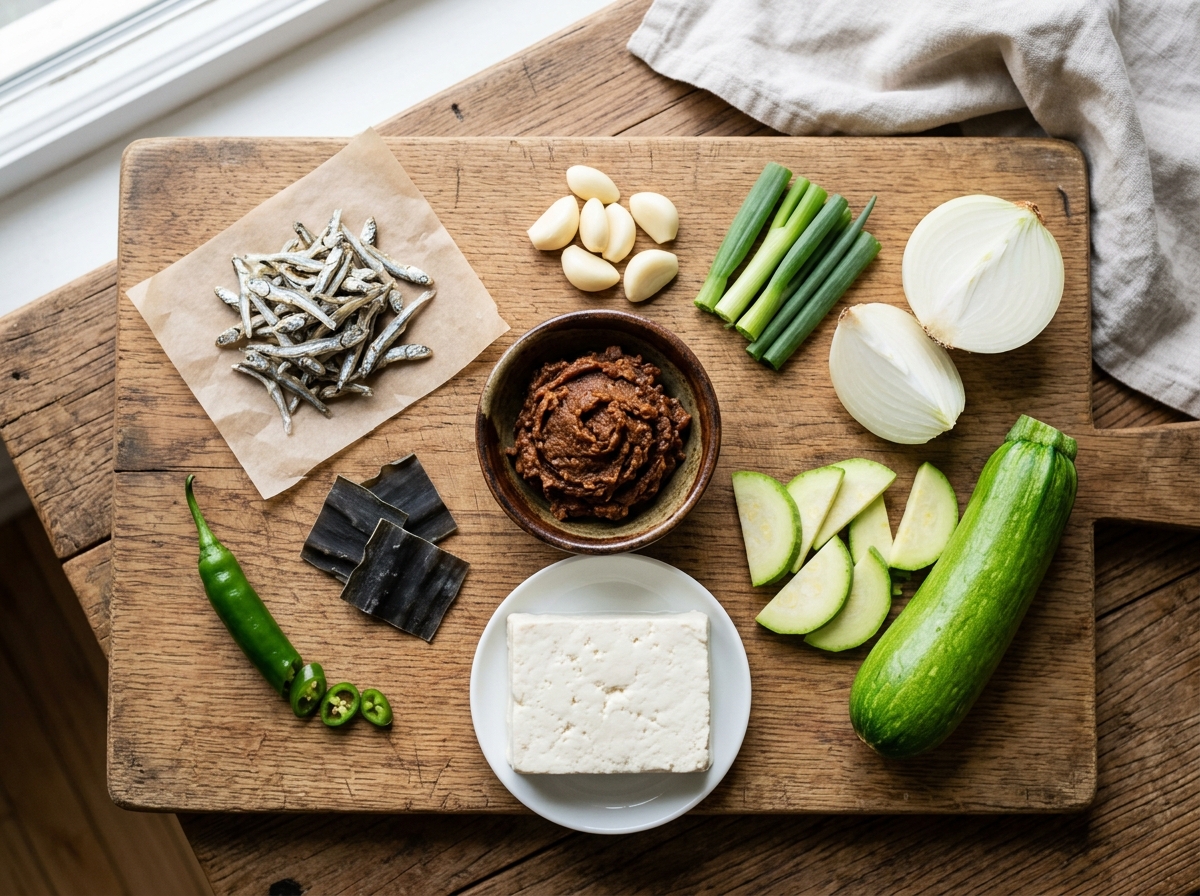
- 3 cups water or anchovy-kelp broth
- 6-8 dried anchovies (medium size, guts removed) and 1 piece dried kelp (5×5 cm) for broth
- 2-3 tablespoons doenjang (Korean fermented soybean paste)
- 1 tablespoon gochugaru (Korean red pepper flakes), optional
- 1 Korean zucchini (aehobak) or regular zucchini, about 200g, cut into half-moons
- 1 package soft or medium tofu (300g), cubed
- 1/2 medium onion, diced
- 3-4 cloves garlic, minced
- 1 green chili pepper or jalapeño, sliced
- 2 green onions, chopped
- 1 teaspoon soup soy sauce (gukganjang) or regular soy sauce, optional
Doenjang jjigae is the soul of Korean home cooking—a thick, earthy, deeply savory stew that appears on tables almost daily. Unlike kimchi jjigae’s bright tang, this one leans into the funky richness of fermented soybean paste, balanced by soft, silky tofu and tender zucchini that soak up all that umami. It’s humble, endlessly adaptable, and incredibly forgiving for beginners.
Make the broth base
Start by building a quick broth if you’re not using plain water. In a small pot, bring 3 cups of water to a boil with the dried anchovies (guts and heads removed—they add bitterness) and kelp. Simmer for 7-8 minutes, then strain out the solids. This anchovy-kelp stock gives backbone and depth; if you skip it, the stew will still be good but a bit flatter. You can also use dashida (Korean stock powder) or even chicken broth in a pinch.
Bloom the doenjang
Here’s where doenjang brand matters. Korean doenjang varies wildly in saltiness—some artisanal or homemade varieties are intensely salty and funky, while mass-market brands like Sempio or Chung Jung One tend to be milder and slightly sweeter. Start with 2 tablespoons of doenjang if you’re unsure of your brand, taste the broth after it simmers, then add more if needed. It’s much easier to add than to fix an over-salted stew.
In your serving pot (ideally a Korean earthenware ttukbaegi, but any small pot works), add the hot broth and whisk in the doenjang until fully dissolved. Add the gochugaru if you want a little heat and color—it’s traditional but not mandatory. Bring to a gentle boil.
Add vegetables and tofu
Once the broth is bubbling, add the diced onion and minced garlic first—they need a few minutes to soften and sweeten the broth. Let them cook for 3-4 minutes. Then add the zucchini slices. Korean aehobak (애호박) is the ideal choice here—it’s pale green, tender, and slightly sweet, with a delicate texture that doesn’t turn mushy. Regular zucchini works fine but can release more water and get softer faster, so don’t overcook.
Simmer for 5-6 minutes until the zucchini is just tender but still holds its shape. Now gently add the tofu cubes. Use soft (sundubu grade) or medium tofu—firm tofu won’t absorb the broth as well. Don’t stir aggressively or the tofu will break apart; just nestle the cubes into the liquid and let them heat through for 2-3 minutes.
💡 Tip: The tofu and zucchini are the heart of this stew’s texture contrast—silky tofu against tender-crisp zucchini. If your zucchini turns to mush, you’ve cooked it too long; pull it off heat as soon as it’s knife-tender.
Finish and adjust
Taste the broth now. If it’s too mild, add a bit more doenjang (half a tablespoon at a time) or a splash of soup soy sauce for salinity without extra funk. If it’s too salty, add a little water or let a halved potato simmer in the stew for a few minutes to absorb some salt, then remove it.
Scatter the sliced green chili and green onions on top and let the stew bubble for another minute. The green onions should stay bright and fresh, not gray and overcooked. Turn off the heat.
Serving and variations
Serve doenjang jjigae piping hot, straight from the pot if possible, with a bowl of steamed white rice and a few banchan. The stew should be thick enough to cling to your spoon but still soupy. It’s even better the next day when the flavors meld.
Common additions: thinly sliced pork belly or beef (add with the onions), mushrooms (shiitake or oyster), potato cubes, or a handful of spinach at the end. For a richer stew, sauté the doenjang in a teaspoon of sesame oil before adding the broth—it deepens the flavor and cuts some of the raw bean paste edge.
Substitutions: If you can’t find Korean zucchini, use small summer squash or even kabocha chunks (which add sweetness). No tofu? Silken tofu from the shelf-stable box works in a pinch. And if doenjang is impossible to source, a mix of white miso and a tiny bit of red miso can approximate it, though you’ll lose some of that signature fermented depth.