Crispy Pajeon & Kimchijeon (Korean Savory Pancakes)

- Prep
10 minutes - Cook
15 minutes - Serves
2-3 servings - Difficulty
easy
Ingredients
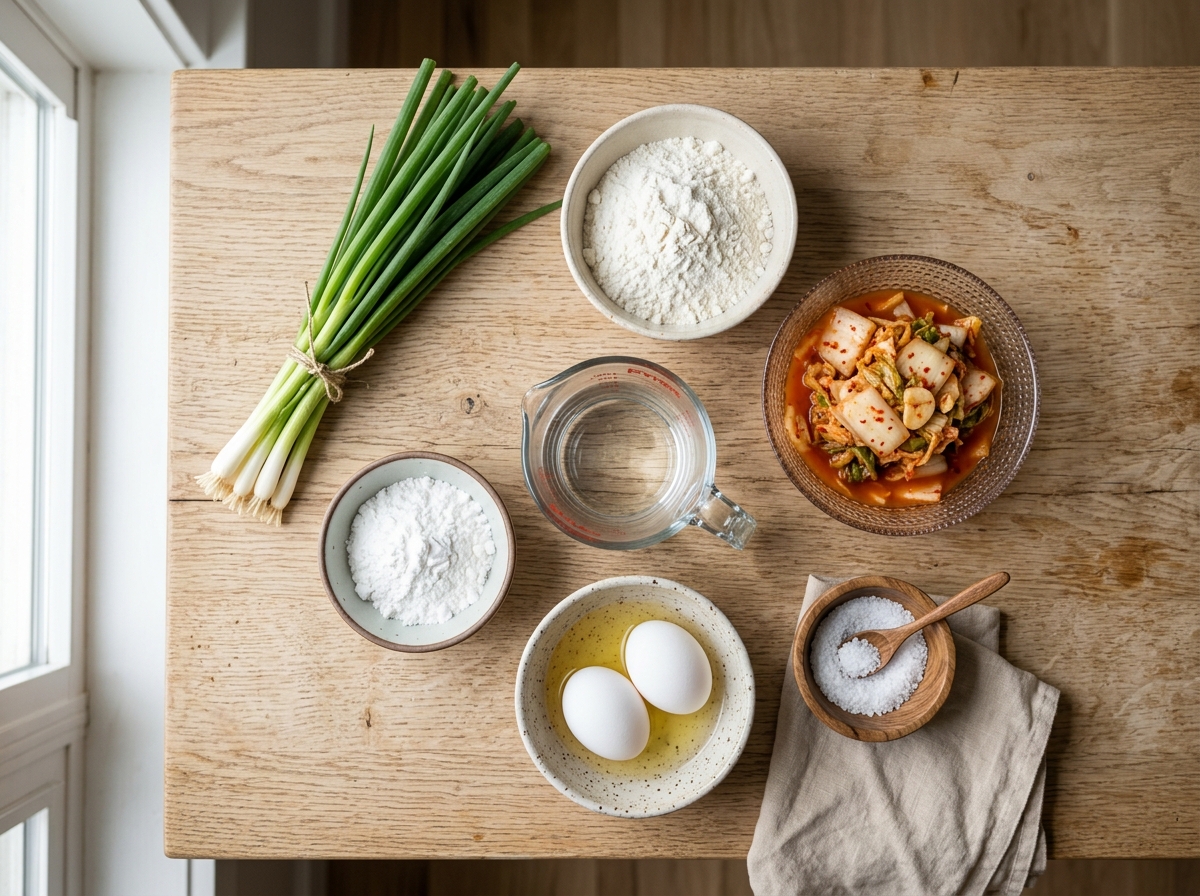
- 1 cup all-purpose flour
- 3 tablespoons potato starch or cornstarch
- 1 large egg
- 1 cup cold water (plus 2-3 tablespoons if needed)
- ½ teaspoon salt
- 1 bunch scallions (about 8-10 scallions), cut into 3-inch lengths
- 1 cup sour kimchi, chopped (for kimchijeon variation)
- 3-4 tablespoons neutral oil (vegetable or canola)
- FOR DIPPING SAUCE (Cho-ganjang):
- 2 tablespoons soy sauce
- 1 tablespoon rice vinegar
- 1 teaspoon gochugaru (Korean red pepper flakes)
- ½ teaspoon sugar
- 1 teaspoon toasted sesame seeds
- 1 teaspoon sesame oil
Pajeon is the savory pancake Koreans reach for on rainy days, served alongside makgeolli or soju, or whenever you need something crispy, salty, and satisfying. The secret to restaurant-quality crunch isn’t fancy technique—it’s the right batter ratio and generous oil. Once you nail the basic scallion version, you can swap in kimchi for kimchijeon or add seafood, mushrooms, whatever you like.
Make the Dipping Sauce First
Mix all the dipping sauce ingredients in a small bowl and set aside. The flavors will marry while you cook, and you want this ready the moment your pancake hits the plate. The balance of salty-tangy-spicy-nutty is what makes every bite addictive.
Mix the Batter for Maximum Crispiness
In a large bowl, whisk together the flour, potato starch, and salt. The potato starch is your secret weapon for crispiness—it creates a lighter, crunchier texture than flour alone. If you can’t find potato starch, cornstarch works nearly as well.
Crack in the egg and add the cold water. Whisk until just combined and slightly lumpy, like American pancake batter. Overmixing develops gluten and makes the pancake chewy instead of crisp. The batter should be thin enough to pour easily but thick enough to coat the back of a spoon. If it’s too thick, add cold water one tablespoon at a time.
💡 Tip: Cold water keeps the batter from getting gummy. Some cooks even add an ice cube or two to keep everything chilled while they work.
Prepare Your Pancake
For pajeon (scallion pancake): Add the scallion pieces directly to the batter and stir gently to coat. You want a generous amount of scallions—the batter should barely hold them together, not drown them.
For kimchijeon (kimchi pancake): Squeeze excess liquid from the chopped kimchi (save it for the batter if you want extra tang), then fold the kimchi into the batter. Older, sourer kimchi works better here—the fermented flavor shines through the frying.
Fry Hot and Generously
Heat a large nonstick or cast-iron skillet over medium-high heat. Add 2-3 tablespoons of oil—yes, that much. Korean pancakes aren’t delicate; they’re practically shallow-fried, and that oil is what creates the golden, lacy crust.
When the oil shimmers, pour in half the batter (or all of it for one large pancake). Use a spatula to spread it into an even circle about ¼-inch thick. Press down gently to ensure good contact with the hot pan.
Let it cook undisturbed for 3-4 minutes. You’ll hear aggressive sizzling—that’s good. The edges should turn golden and start to pull away from the pan, and the surface should look mostly set with just a few wet spots in the center.
Flip Confidently
Slide your spatula under the pancake to make sure it’s not stuck, then flip in one smooth motion. If it feels stuck, give it another 30 seconds. Add another tablespoon of oil around the edges after flipping—this helps crisp up the second side.
Cook the second side for 2-3 minutes until deeply golden. Press down gently with your spatula to ensure even browning. The pancake should feel firm and crisp when you shake the pan.
Transfer to a cutting board and repeat with remaining batter if making two smaller pancakes.
Slice and Serve Immediately
Cut the pancake into 2-inch squares or wedges using a pizza cutter or sharp knife. Korean pancakes are best eaten hot off the pan when the exterior is crackling-crisp and the interior is tender.
Serve with the dipping sauce on the side. These are finger food—pick up a piece, dip, eat, repeat.
Variations and Substitutions
Can’t find potato starch? Cornstarch works well, or use all flour and add 1 tablespoon of vodka to the batter (the alcohol evaporates quickly and prevents gluten formation, keeping things crisp).
Seafood pajeon is a classic upgrade: add ½ cup mixed seafood (shrimp, squid, mussels) along with the scallions. Mushroom pancakes work beautifully with shiitake or oyster mushrooms, sliced thin.
If your kimchi isn’t sour enough, add a splash of the kimchi brine or a bit of rice vinegar to the batter for that characteristic tang. And if you’re making these for a crowd, keep finished pancakes warm in a 200°F oven on a wire rack—they’ll stay crispier than stacked on a plate.
The real trick is heat and oil. Don’t be shy with either, and you’ll have restaurant-quality jeon every time.