Budae Jjigae (Korean Army Stew) – Spam, Sausage & Ramen

- Prep
15 minutes - Cook
20 minutes - Serves
3-4 servings - Difficulty
easy
Ingredients
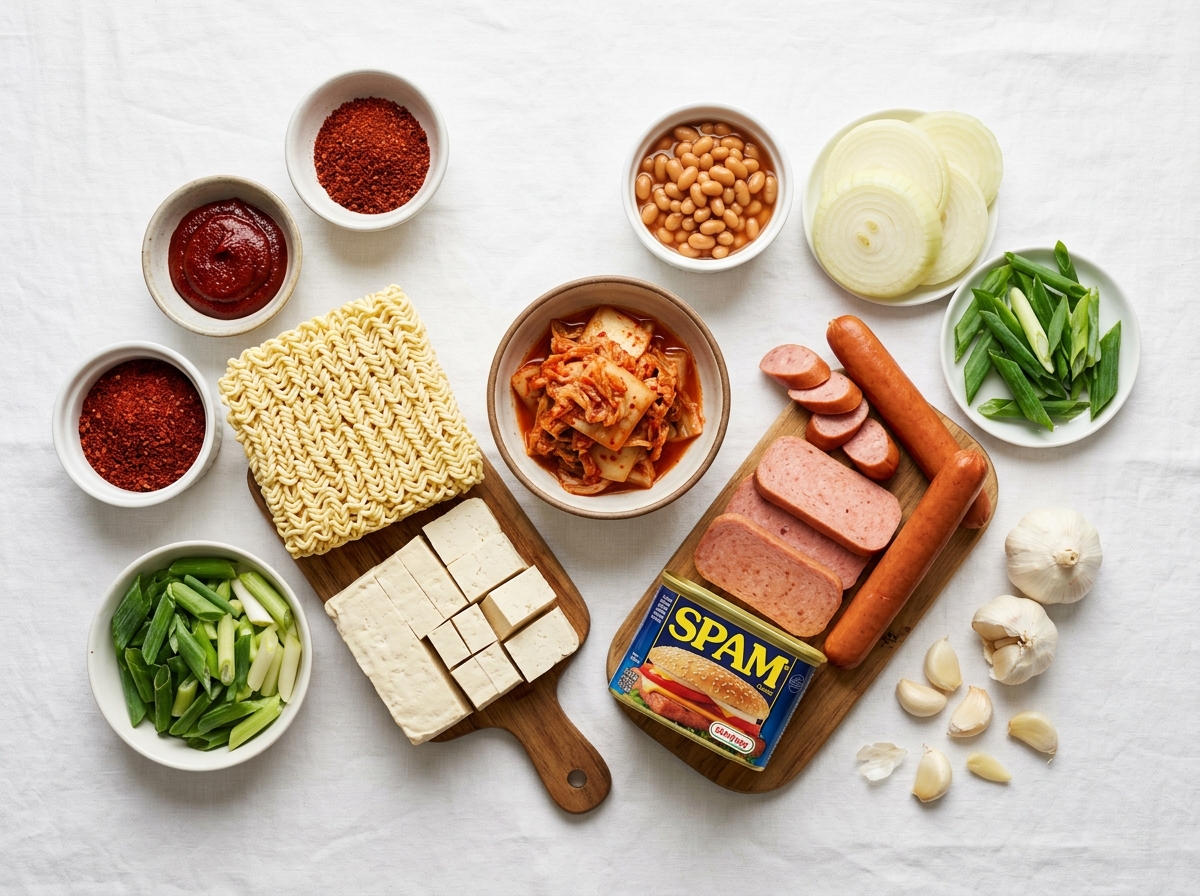
- 1 can (340g) Spam, sliced ¼-inch thick
- 4 hot dogs or Korean sausages, sliced diagonally
- 2 cups sour kimchi, roughly chopped
- 1 package (120g) instant ramen noodles (noodles only, no seasoning packet)
- 200g firm tofu, sliced
- ½ onion, sliced
- 2 green onions, cut into 2-inch pieces
- 4 cloves garlic, minced
- 1 cup canned baked beans (optional but traditional)
- 4 cups anchovy or vegetable broth (or water)
- 2 tbsp gochugaru (Korean red pepper flakes)
- 1 tbsp gochujang (Korean red pepper paste)
- 1 tbsp soy sauce
- 1 tsp sugar
- ½ tsp black pepper
- 1 slice American cheese (optional, for topping)
- 1 tbsp vegetable oil
Budae jjigae is one of those dishes that tells a story—born out of necessity after the Korean War, it transformed surplus American military rations into a beloved Korean comfort stew. The magic is in how those processed meats (yes, Spam and hot dogs!) absorb the spicy, savory broth while everything simmers together. It’s messy, it’s fun, and it’s exactly the kind of one-pot meal you crave on a cold night or after a long day.
Prepare Your Broth Base
Start by making the broth. In a wide, shallow pot or deep skillet (a traditional Korean ttukbaegi stone pot is ideal, but any wide pot works), heat 1 tablespoon of oil over medium heat. Add the minced garlic and sauté for 30 seconds until fragrant, then stir in the gochugaru and gochujang. Let them bloom in the oil for another 20-30 seconds—this step toasts the spices and deepens their flavor instead of giving you a raw, one-dimensional heat.
Pour in your broth (I prefer anchovy broth for depth, but vegetable or even chicken works), then add the soy sauce, sugar, and black pepper. Bring to a gentle boil, then reduce to medium-low. Taste the broth now—it should be savory with a gentle kick. You can always adjust the gochugaru later if you want more heat.
Layer the Ingredients (순서 Matters!)
Here’s where budae jjigae gets fun. Unlike most stews where you just toss everything in, the order you add ingredients makes a big difference. Arrange your kimchi, onion, and tofu in the simmering broth first. These items need the most time and they’ll flavor the broth as they cook. Nestle them in gently so everything touches the liquid.
Next, add your Spam and sausage slices on top. Why not at the beginning? Spam and hot dogs are already cooked and quite salty. If you put them in too early, they’ll make the broth overly salty and greasy. By adding them midway, they heat through and pick up flavor without dominating the stew. Let everything simmer together for 8-10 minutes. You’ll see the kimchi soften and the broth turn richer and redder.
If you’re using baked beans, add them now along the edge of the pot. They’re a classic budae jjigae ingredient—sweet, a little weird with kimchi, but somehow it works.
Add the Ramen Noodles Last
This is the step most people get wrong. Do not add the ramen noodles (라면사리) until the very end, about 3-4 minutes before you’re ready to serve. Why? Ramen noodles cook fast and they soak up broth like a sponge. If you add them too early, they’ll turn mushy and bloated, and your stew will go from soupy to sludgy.
Nestle the noodles into the bubbling stew, gently pushing them under the broth so they cook evenly. Let them simmer for 3-4 minutes, stirring occasionally, until they’re tender but still have a bit of chew. Toss in your green onions in the last minute.
💡 Tip: If you’re serving family-style and people will be eating slowly, keep the ramen noodles on the side and add small portions to individual bowls. This keeps leftovers from turning into mush.
Finish and Serve
Turn off the heat and lay a slice of American cheese on top if you like (it melts into creamy, salty goodness—trust the process). Serve the stew bubbling hot, straight from the pot if possible. The idea is everyone gathers around, grabs their chopsticks, and digs in together.
Budae jjigae is best with a bowl of steamed white rice on the side to balance the salty, spicy broth. If you can’t find gochugaru, use regular red pepper flakes, but reduce the amount by half—they’re much spicier. No Spam? Use any canned luncheon meat or even thick-cut deli ham. No Korean sausages? Regular hot dogs or smoked sausage work great. The soul of this dish isn’t perfection—it’s making something delicious and comforting out of what you have.