Understanding Korean Drinking Culture and Etiquette

If you’re heading to Korea for work, study, or travel, you’ll quickly discover that drinking isn’t just a pastime—it’s a social language. Whether you’re out with colleagues after work or making friends at a university gathering, understanding the unwritten rules of Korean drinking culture will help you connect more deeply and avoid awkward moments.
Why Drinking Matters in Korean Social Life
In Korea, drinking sessions (often called 회식 hoesik for work gatherings or 술자리 suljari more generally) are where real bonding happens. These aren’t just casual happy hours—they’re essential networking events where hierarchies soften, colleagues speak more openly, and friendships solidify.
Work culture in particular leans heavily on after-hours drinking. It’s not uncommon for teams to head out for multiple “rounds” (차 cha), moving from restaurants to bars to karaoke, sometimes until the early morning. While younger generations are slowly shifting away from obligatory drinking, it remains a significant part of professional and social life.
Refusing to drink outright can sometimes be seen as antisocial, though attitudes are changing. If you don’t drink alcohol, it’s perfectly acceptable to participate with non-alcoholic options and focus on the social aspect rather than the alcohol itself.
The Golden Rules of Pouring and Receiving
Korean drinking etiquette centers on respect, particularly toward elders and superiors. The most important rules involve how you pour and receive drinks.
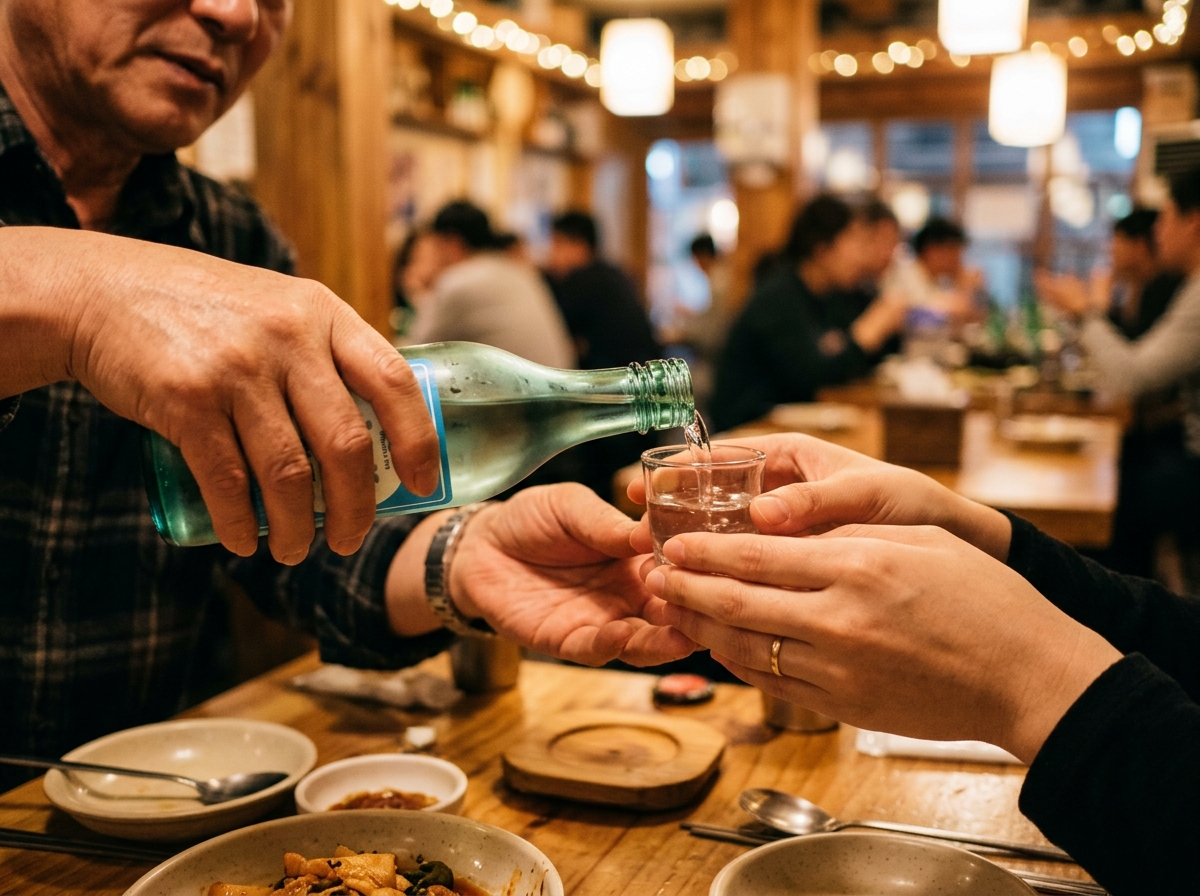
Pouring for Others
Never pour your own drink. Always pour for others, and they’ll pour for you in return. This reciprocal gesture is fundamental.
When pouring for someone older or senior to you:
- Hold the bottle with your right hand
- Place your left hand on your right forearm, wrist, or chest as a sign of respect
- Fill their glass when it’s empty or nearly empty (watch for this)
When pouring for peers, you can use just your right hand, though using both hands is never wrong.
Receiving a Drink
When someone pours for you, especially someone older:
- Hold your glass with both hands
- Turn your head slightly away when you take your first sip (traditionally to avoid direct eye contact with elders while drinking)
- Some people cover their mouth with their hand when drinking in front of seniors
The first round is almost always consumed together in one shot after a collective toast—usually “건배!” (geonbae, meaning “cheers”) or “위하여!” (wihayeo, “for the sake of”).
Popular Drinks You’ll Encounter
Korean drinking culture has its own distinct beverage hierarchy, and knowing what you’re drinking helps you pace yourself.
| Drink | Description | Typical ABV | When You’ll See It |
|---|---|---|---|
| Soju | Clear distilled spirit, slightly sweet | 16-20% | Everywhere—the default choice |
| Maekju (beer) | Light lagers, less hoppy than Western beers | 4-5% | Often paired with soju as somaek |
| Somaek | Soju + beer mix | ~8-10% | Social gatherings, after the first round |
| Makgeolli | Milky rice wine, slightly fizzy | 6-8% | Casual meals, older-skewed crowds |
Soju is the undisputed king. It’s affordable, widely available, and dangerously easy to drink. A standard green bottle contains about seven shots, and it’s not unusual to go through multiple bottles in one sitting.
Somaek (soju + maekju) is a beloved ritual. The ratio varies, but a common method involves dropping a shot of soju into a beer glass and creating a small “bomb” drink. Tap the table three times with the glass before drinking for good luck.
Anju: You Never Drink Alone (or Empty-Stomached)
Koreans rarely drink without food. Anju (안주) refers to any food eaten while drinking, ranging from simple snacks to full meals.
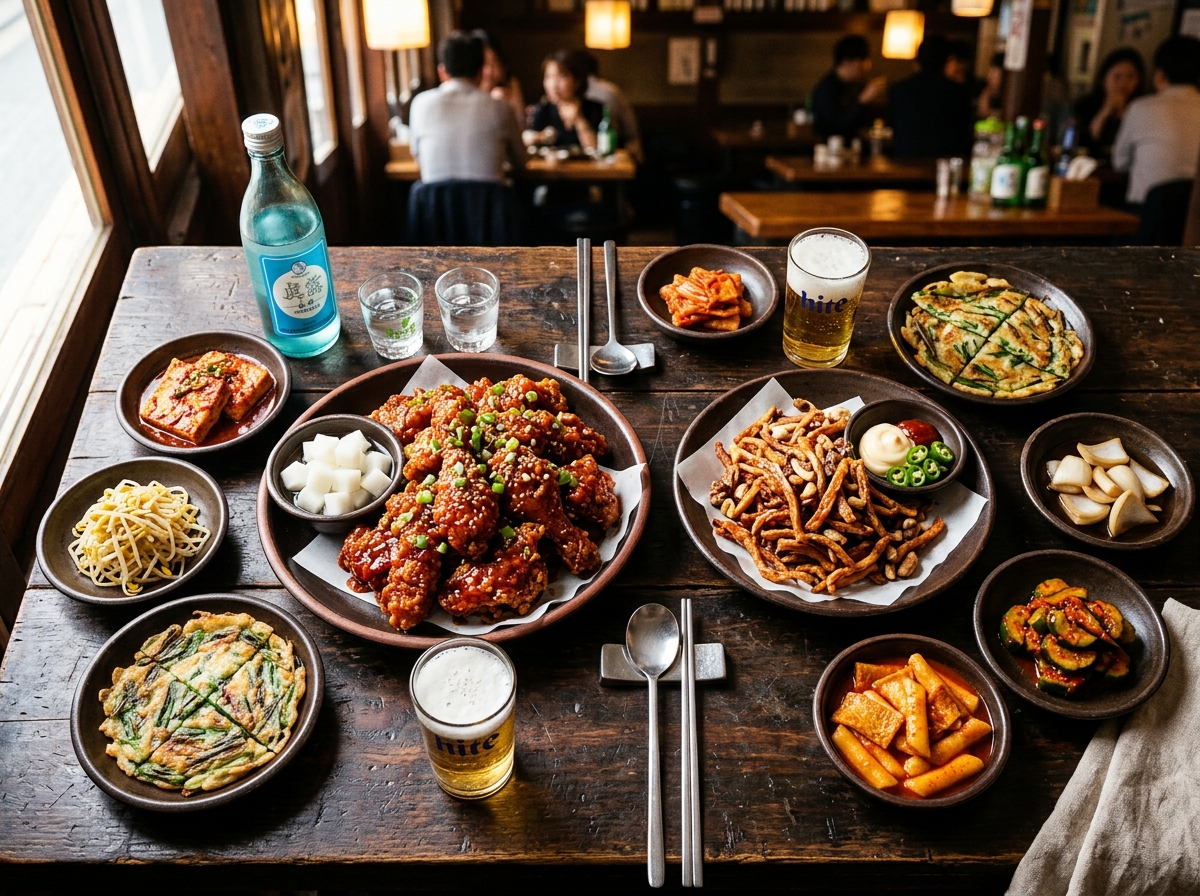
Common anju includes:
- Chimaek: Fried chicken (chikin) and beer (maekju)—a beloved combination
- Jokbal: Braised pig’s trotters
- Dried squid (ojingeo): Chewy, salty, pairs perfectly with beer
- Pajeon: Savory green onion pancakes
- Fruit plates: Often appear later in the night
- Ramyeon: Instant noodles at late-night spots
The food isn’t optional—it’s part of the experience and helps everyone pace their drinking. Ordering multiple dishes to share is standard, and the group typically splits the bill evenly.
💡 Tip: If you’re sensitive to alcohol, eat a proper meal before heading out. Korean drinking sessions can last hours, and the food might not arrive immediately.
The “Rounds” System and When to Leave
A typical Korean drinking night follows a multi-round structure:
- First round (1차): Dinner and drinks at a restaurant
- Second round (2차): Move to a bar or pub for more drinks
- Third round (3차): Karaoke (noraebang) or a late-night pojangmacha (street tent bar)
- Sometimes 4차, 5차…: For the truly committed
Each round happens at a different venue. The group generally moves together, though it’s socially acceptable to bow out politely after the second round, especially if you’re not close with everyone.
Leaving early from a work hoesik requires tact. Wait until after the first round, then excuse yourself respectfully, citing an early morning or prior commitment. Slipping away without a word is considered rude.
Age, Hierarchy, and the “One-Shot” Culture
Korean drinking reflects the broader culture of respect for age and rank. Always be aware of who is older or senior to you in the group.
The one-shot (wonsyat) is common: someone (often the most senior person) will call for everyone to down their drinks in one gulp. You’re expected to participate, though you can take a smaller pour if you’re struggling.
If someone senior offers you a drink directly (pouring specifically for you), it’s a gesture of goodwill. Accept graciously, drink, and offer to pour for them in return.
Passing drinks: Sometimes people will exchange glasses as a sign of closeness or respect. If someone offers you their glass to drink from, it’s a bonding gesture—finish it and return it, or keep it and give them yours.
Modern Shifts and How to Opt Out Gracefully
Younger Koreans and progressive workplaces are increasingly rejecting mandatory drinking culture. The term “회식 거부” (hoesik geobu, refusal of company dinners) reflects this generational shift.
If you don’t drink or need to limit your intake:
- Be upfront early: “I don’t drink alcohol, but I’d love to join for the food and company.”
- Order alternatives: Cider (like Chilsung), juice, or even water—participation matters more than consumption.
- Blame health: “My doctor told me to cut back” is universally understood and respected.
- Nurse one drink slowly: If pressured, accept one drink and make it last.
Foreigners generally get more leeway than locals, so don’t feel you must keep pace with seasoned drinkers.
Final Thoughts: Participate, Don’t Perform
Korean drinking culture can feel intense, but at its heart, it’s about connection and breaking down formality. You don’t need to drink yourself under the table to be accepted—showing up, engaging warmly, and respecting the social rituals matters far more.
Learn the basic etiquette, pace yourself, and remember that even Koreans sometimes struggle with the demands of hoesik culture. The goal is shared experience, not endurance. With a little awareness and a lot of good humor, these sessions can become some of your most memorable moments in Korea.