Seoul vs Busan: Which City Should You Visit First?

You’re booking your first trip to South Korea, and the big question hits: Seoul or Busan first? Both cities offer completely different experiences, and your choice will shape how you experience Korea. Seoul is the sprawling, high-energy capital where traditional palaces meet K-pop billboards. Busan is the laid-back coastal city where mountains meet the sea and locals actually have time to chat. Here’s how to decide which one deserves your first days in Korea.
The Practical Stuff: Getting There and Around
Seoul is almost certainly where you’ll land. Incheon International Airport handles the vast majority of international flights, and it’s a quick 45–60 minute train or bus ride into central Seoul. Once you’re in the city, the subway system is flawless—12 lines, English signage everywhere, and a T-money card gets you on trains, buses, and even taxis.
Busan has its own international airport (Gimhae), but far fewer direct long-haul flights serve it. Most visitors fly into Incheon then take a 2.5–3 hour KTX high-speed train south to Busan (around ₩60,000/$45–50 one-way). Busan’s subway is smaller—just four main lines—but perfectly adequate. Taxis are also cheaper here than in Seoul.
| Factor | Seoul | Busan |
|---|---|---|
| Airport access | Direct international hub (ICN) | Fewer international flights (PUS) |
| Transit from ICN | Already there | 2.5–3 hr by train |
| Subway lines | 12+ lines, extensive | 4 lines, covers main areas |
| Walkability | Varies by district | More compact, beach-friendly |
💡 Tip: If you’re flying into Incheon and only have 3–4 days total, starting in Seoul saves you a half-day of train travel.
Culture and Sightseeing: Palaces vs Coastline
Seoul is where you’ll find Korea’s royal history on full display. Gyeongbokgung Palace, Changdeokgung’s Secret Garden, and the hanok villages of Bukchon give you that postcard-perfect traditional Korea experience. The contrast is the point: one minute you’re watching the changing of the guard in silk robes, the next you’re in a neon-lit arcade in Gangnam.
Museums, galleries, and historic sites are densely packed. If you want to understand how Korea went from war-torn peninsula to tech giant in 70 years, Seoul tells that story.
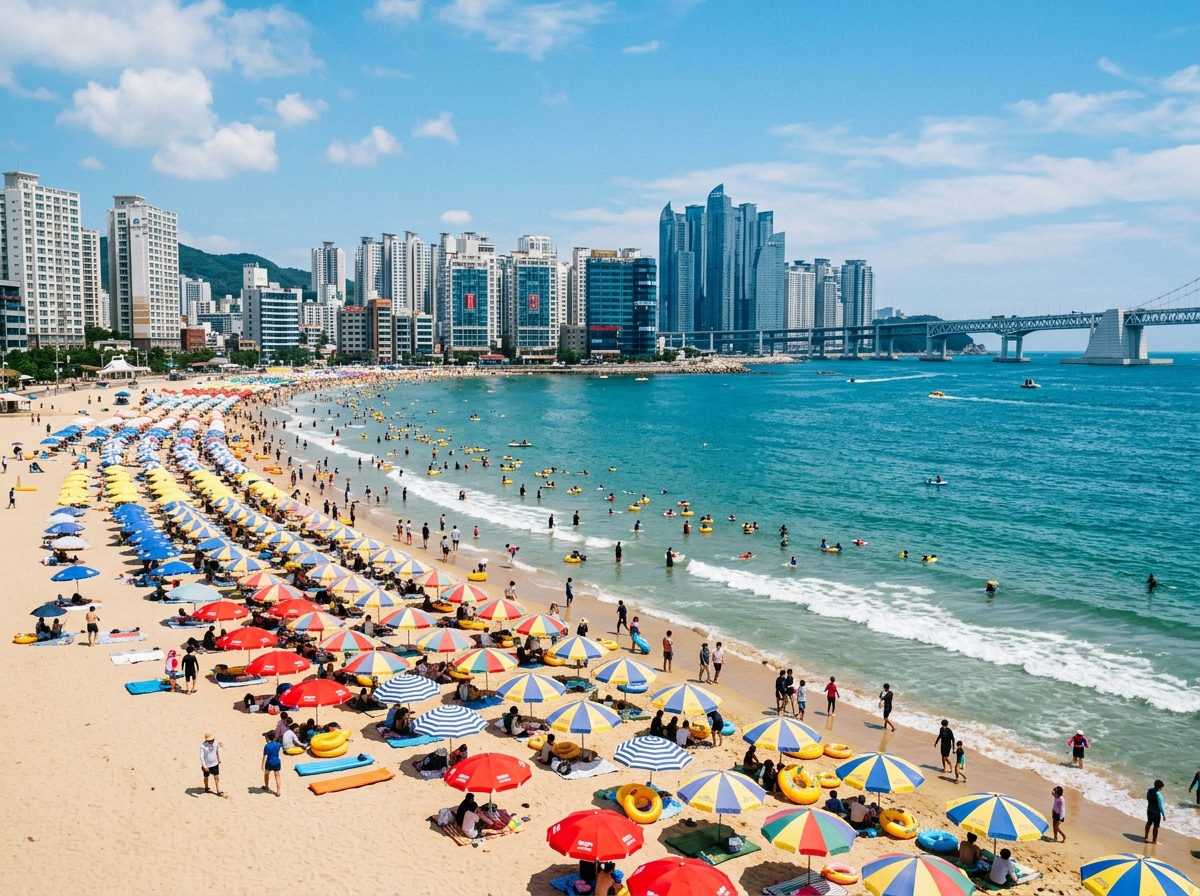
Busan’s appeal is completely different. Yes, there are temples—Haedong Yonggungsa sits dramatically on coastal cliffs—but the vibe is about scenery and slower exploration. Gamcheon Culture Village offers the colorful hillside Instagram moment, but Busan’s real magic is in places like Taejongdae Park, where forested cliffs drop into the sea, or the fish markets where ajummas will grill your seafood purchase on the spot.
If you crave palaces, museums, and urban intensity, Seoul wins. If you want beaches, hiking, and a more human pace, Busan is your city.
Food: Street Eats vs Seafood Heaven
Both cities are phenomenal for food, but the specialties differ. Seoul is where you’ll find the full range: Korean BBQ at every price point, endless fried chicken joints, pojangmacha tent bars serving soju and tteokbokki, and every regional Korean dish represented somewhere in the city. Gwangjang Market alone will keep you busy for hours with bindaetteok (mung bean pancakes), mayak gimbap, and live octopus if you’re brave.
Seoul also leads in international and fusion food—you’ll find excellent Japanese, Italian, and modern Korean fine dining, especially in neighborhoods like Itaewon and Gangnam.
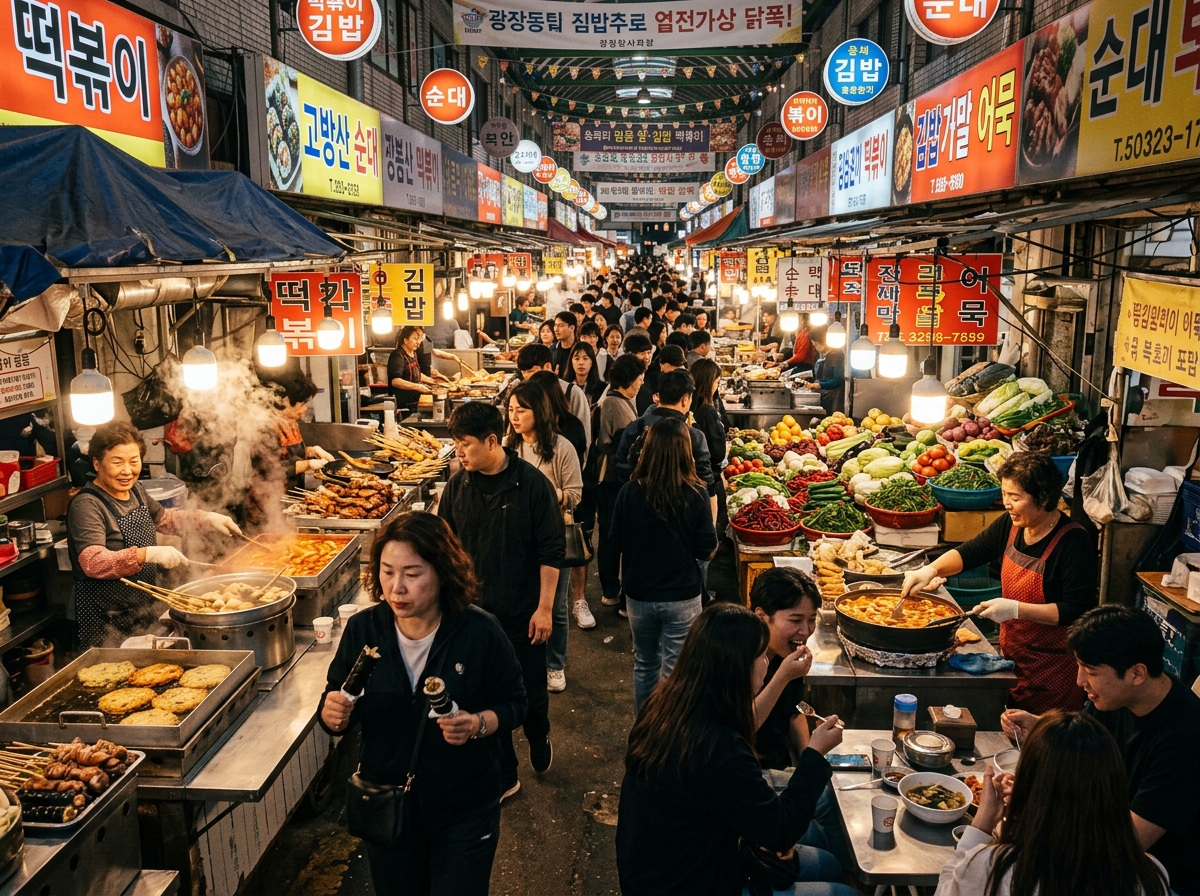
Busan is the seafood capital. Jagalchi Fish Market is the largest in Korea, and you can pick live fish, have it prepared on the spot, and eat it with a view of the harbor. Dwaeji gukbap (pork and rice soup) is Busan’s signature comfort food, and milmyeon (cold wheat noodles) was invented here. The seafood is not just fresher—it’s cheaper and more central to the food culture.
If you want variety and the full Korean food spectrum, Seoul has the edge. If you’re a seafood lover or want to eat exceptionally well without the premium Seoul prices, Busan delivers.
The Vibe: Fast vs Friendly
Seoul moves fast. People walk faster, talk faster, and the city never really sleeps. It’s thrilling if you love that energy—you can bar-hop in Hongdae until 5 a.m., hit a jjimjilbang (bathhouse) to recover, then start again. But it can also feel relentless, especially if you’re jet-lagged or introverted.
Busan feels more approachable. Locals have a reputation for being chattier and more relaxed (by Korean standards). The dialect is distinct, the pace is slower, and there’s genuine beach-town energy in summer. It’s easier to have a spontaneous conversation with a restaurant owner or market vendor here.
For first-timers who might feel overwhelmed by a mega-city, Busan offers a gentler introduction to Korea. For those who want to dive headfirst into the Korean Wave and urban spectacle, Seoul is unbeatable.
Weather and Seasons Matter
Both cities have four real seasons, but Busan’s coastal location makes it milder in winter and more humid in summer. If you’re visiting November–March, Busan will feel noticeably warmer and more comfortable. Seoul winters are dry and bitterly cold—beautiful if there’s snow, but harsh if you’re underprepared.
Summer (June–August) in Busan means beach season, but also heavy monsoon rains and sticky humidity. Seoul gets just as hot and rainy, but without the ocean to cool off in.
Spring (April–May) and fall (September–October) are gorgeous in both cities, though Seoul’s autumn foliage in places like Namsan and along the Han River is particularly stunning.
So Which City First?
If this is your first time in Korea and you have less than a week, start in Seoul. You’ll land there anyway, it offers the broadest introduction to Korean culture, food, and modern life, and you won’t lose time in transit. Busan can wait for your second trip—or tack on 2–3 days at the end if you have the time.
If you’re someone who gets stressed in massive cities, prefers coastal settings, or is visiting in the colder months, consider reversing it. Fly into Incheon, immediately train down to Busan, then finish your trip with a few days in Seoul before flying home. You’ll ease into Korea at a gentler pace.
And if you have 10+ days? Visit both. The KTX makes it easy, and you’ll appreciate how different two cities in the same country can feel.
Final Thoughts
There’s no wrong answer here—Seoul and Busan are both essential Korean experiences. Seoul is the Korea you see in music videos and news headlines: ambitious, fast, and unapologetically modern. Busan is the Korea you didn’t know you needed: scenic, delicious, and refreshingly human-scaled.
Choose based on your travel style, your timeframe, and what you want to brag about when you get home. Either way, you’re in for an incredible trip.