How Korean Convenience Stores Changed the Way I Travel

The first time I landed in Seoul, I did what most travelers do: I mapped out restaurants, checked café recommendations, and planned elaborate meal stops. Then I discovered Korean convenience stores—GS25, CU, 7-Eleven, and Emart24—and everything changed. What started as a quick stop for water turned into a complete shift in how I approach travel logistics, budgeting, and even eating in Korea.
If you’ve only experienced convenience stores back home, you’re not ready for what Korea has built. These aren’t just places to grab a candy bar at 2 AM. They’re mini-ecosystems that solve dozens of small travel problems you didn’t know you had.
They’re Actually Convenient (and Everywhere)
Korean convenience stores are absurdly abundant. Walk 200 meters in any urban area and you’ll pass at least two, often competing branches directly across the street from each other. This density means you’re never more than a minute or two from essentials, whether you’re in downtown Seoul, a residential neighborhood in Busan, or a small town near the coast.
Open 24/7 and staffed at all hours, they became my safety net. Missed dinner because a museum visit ran late? No problem. Need breakfast before a 6 AM bus? Sorted. Forgot phone charging cables, bandages, or umbrella when it started pouring? All there.
The consistency is what won me over. Every major chain uses similar layouts, so once you’ve navigated one CU, you can walk into any other location nationwide and know exactly where to find what you need.
The Food Is Shockingly Good
This is where Korean convenience stores truly shine and where they differ most dramatically from their Western counterparts. The prepared food section isn’t an afterthought—it’s a legitimate meal option that locals use constantly.
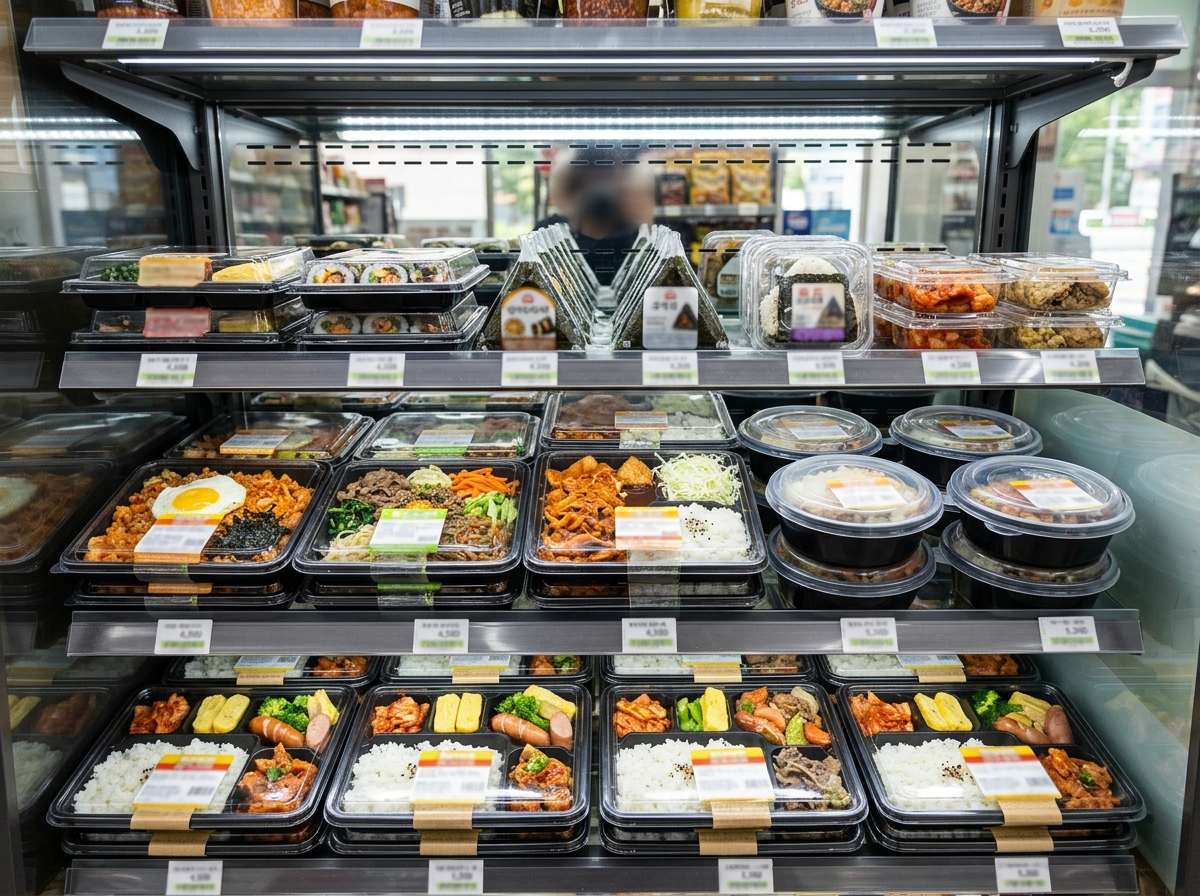
I’ve eaten countless dosirak (lunchboxes) ranging from ₩3,000–₩6,000 (roughly $2–5 USD). You’ll find gimbap, bibimbap, curry rice, Korean-style pasta, and seasonal specials. The quality sits somewhere between decent homemade food and casual restaurant fare—fresh enough that items are restocked multiple times daily and removed when they approach expiration.
What I Actually Eat
Here’s what became my convenience store rotation:
- Triangle gimbap (samgak gimbap): ₩1,200–₩1,800, perfect portable breakfast
- Dosirak lunchboxes: full meals with rice, protein, and sides
- Instant ramyeon: but here’s the key—you cook it at the store using their hot water dispensers and eat at provided tables
- Ready-to-microwave meals: staff will heat them for you
- Fresh fruit cups, salads, and boiled eggs: when you need something lighter
The triangular gimbap alone changed my mornings. Unwrap it (there’s a specific technique—pull the tabs in order), and you have a filling rice ball with various fillings. Tuna-mayo and kimchi are classics, but you’ll find variations like bulgogi, cheese, and even dessert versions.
The Eating Space Makes All the Difference
Most Korean convenience stores include a small seating area—a few tables, chairs, a microwave, and a hot water dispenser. This sounds minor, but it transforms the entire experience.
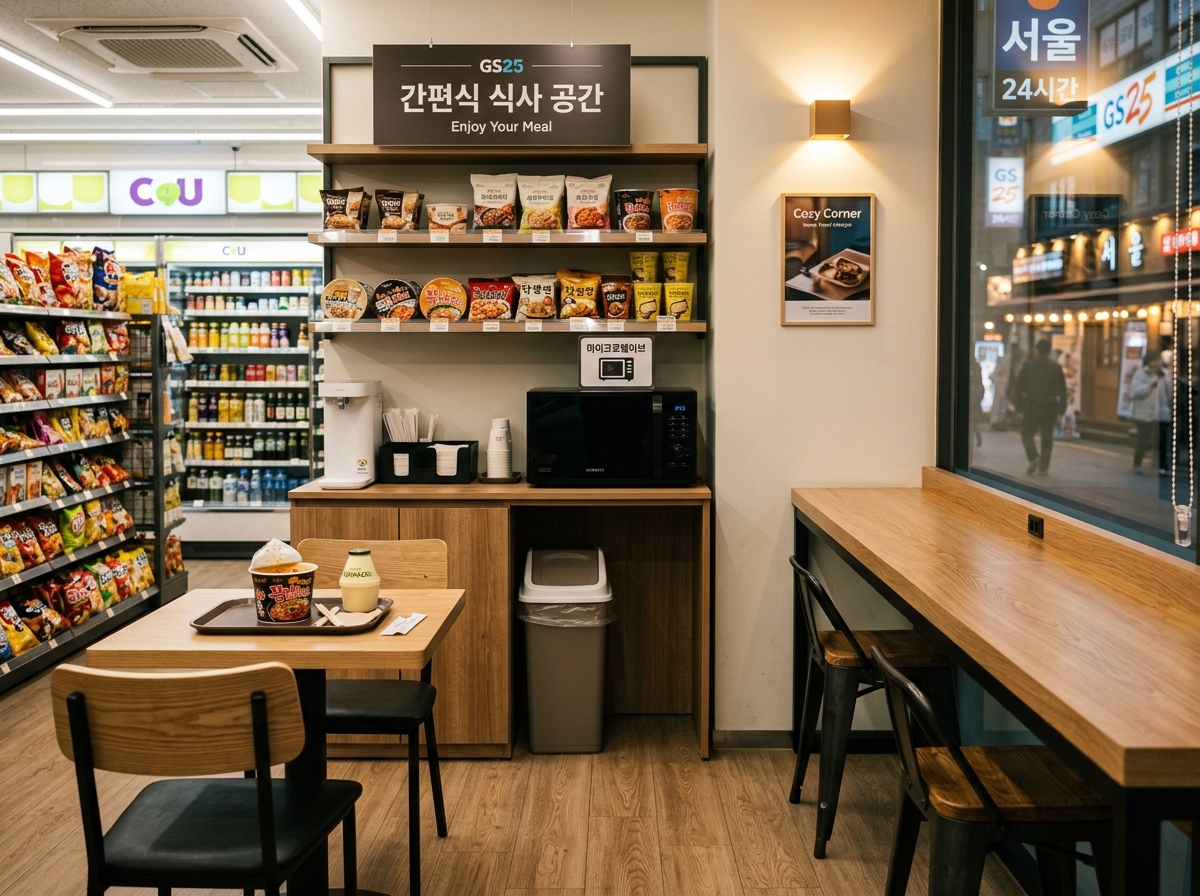
Instead of eating on a curb or back in your hotel, you can sit down properly. I’ve had countless lunches perched at these tables, watching office workers on their breaks do exactly the same thing. There’s zero stigma—this is completely normal, and staff won’t rush you.
The hot water dispenser is crucial. Buy instant ramyeon (₩1,000–₩2,000), add hot water, wait three minutes, and you have a genuinely satisfying meal. Some stores provide free basic kimchi or pickled radish as sides. It’s not fancy, but after a long day of walking, a ₩1,500 bowl of ramyeon hits differently than a ₩15,000 restaurant meal.
Budget Impact: Real Numbers
I compared two weeks of eating in Korea using different approaches:
| Eating Style | Daily Average | Weekly Total |
|---|---|---|
| Restaurants only (budget-casual) | ₩35,000–50,000 | ₩245,000–350,000 |
| Mixed (restaurants + convenience stores) | ₩20,000–30,000 | ₩140,000–210,000 |
| Convenience store-heavy | ₩12,000–18,000 | ₩84,000–126,000 |
I naturally landed in the mixed category: cafés and restaurants for experiences I wanted, convenience stores for functional meals. This approach saved me roughly ₩100,000+ per week (around $75+ USD) compared to eating every meal out, without feeling like I was scrimping.
Beyond Food: The Logistics Lifesaver
Korean convenience stores solve problems I didn’t anticipate:
Bill payments and transportation cards: You can reload your T-money or Cashbee card at any store. No hunting for specific subway kiosks.
Package services: Many locations accept courier pickups and deliveries. I’ve shipped luggage ahead to my next destination from a CU counter.
Toilets: Not always, but many stores have restrooms available—lifesaving during long walks.
ATMs: International-friendly ATMs are standard at major chains.
Free WiFi: Most offer free connection if you need to check directions quickly.
Phone/portable charger: They sell cheap emergency cables and often have charging stations.
💡 Tip: Download the store apps (GS25, CU) before your trip. They frequently offer mobile coupons—I’ve gotten free coffee, buy-one-get-one deals, and instant discounts just by showing a barcode at checkout.
What to Try on Your First Visit
If you’re new to Korean convenience stores, start with these:
- Triangle gimbap: easiest introduction, portable, filling
- Any dosirak with a picture that looks good: trust your eyes
- Banana milk or strawberry milk: iconic Korean drinks (₩1,500–2,000)
- Instant tteokbokki or ramyeon: use the hot water station
- Seasonal specials: stores rotate limited-edition items constantly—collaboration products with popular restaurants, seasonal flavors, regional specialties
Don’t skip the drink section. Beyond the famous banana milk, you’ll find dozens of unique options: citron tea, grain-based drinks (misugaru), aloe drinks, and yogurt smoothies that don’t exist back home.
How This Changed My Travel Rhythm
Before discovering the full potential of Korean convenience stores, I built my days around meal times. Where will we eat lunch? Should we head back toward dinner spots by 6 PM?
Now I travel more fluidly. If I want to stay at a temple until sunset, I grab dinner at a 7-Eleven on the way back. Exploring a neighborhood with no restaurant options? Not a problem anymore. Want to eat breakfast at 5 AM before a day trip? Convenience store.
This flexibility reduced daily stress significantly. I’m not hangry at 2 PM searching desperately for food. I’m not forcing expensive restaurant meals when I’d rather just eat quickly and keep exploring.
The Social Aspect You Don’t Expect
Sitting in convenience store seating areas, I’ve had more spontaneous interactions than in many restaurants. A university student helped me figure out how to heat my instant jjajangmyeon. An older gentleman shared his extra pickled radish. These tiny exchanges don’t happen when you’re siloed in a restaurant booth.
The atmosphere is unpretentious. Everyone’s there for function, not show, which creates an egalitarian space. I’ve seen businesspeople in suits eating next to backpackers, students, and construction workers—all getting the same ₩4,000 lunchbox.
Worth Knowing Before You Go
Store brands vary slightly. CU tends toward younger, trendier products and collaborations. GS25 has strong meal options. Emart24 occasionally offers cheaper prices. 7-Eleven is familiar but less ubiquitous than the Korean chains.
Payment is easy. Cash and all major credit cards work. Many stores accept international contactless payment (Samsung Pay, Apple Pay).
No tipping, no service expectations. Grab what you want, pay, go. Staff might help heat food, but there’s no complicated etiquette.
Expiration dates are strict. Items are pulled quickly, which means freshness is reliable. If something’s discounted with a red sticker, it’s near expiration but still fine—I’ve never had issues with these.
Final Thoughts
Korean convenience stores didn’t just save me money—they gave me independence. I could travel on my own schedule, eat when I wanted, and solve logistical problems without language barriers or stress.
For anyone planning a Korea trip, don’t overlook these spots. They’re not a backup plan or emergency option. They’re a core part of how Korea works, and once you tap into that system, you’ll wonder how you ever traveled without it.
Next time you’re walking past yet another brightly lit GS25 at midnight, don’t keep walking. Go in, grab a triangle gimbap and a banana milk, and see what you’ve been missing.